My role · Furniture design and 3D modelling2023 / 2026
Kin Dining Bench
Eva’s Kin Dining Chair comes together in two steps. This independent bench concept carries that idea across two seats, with a single curved back that slides into the oak base and fastens by hand.
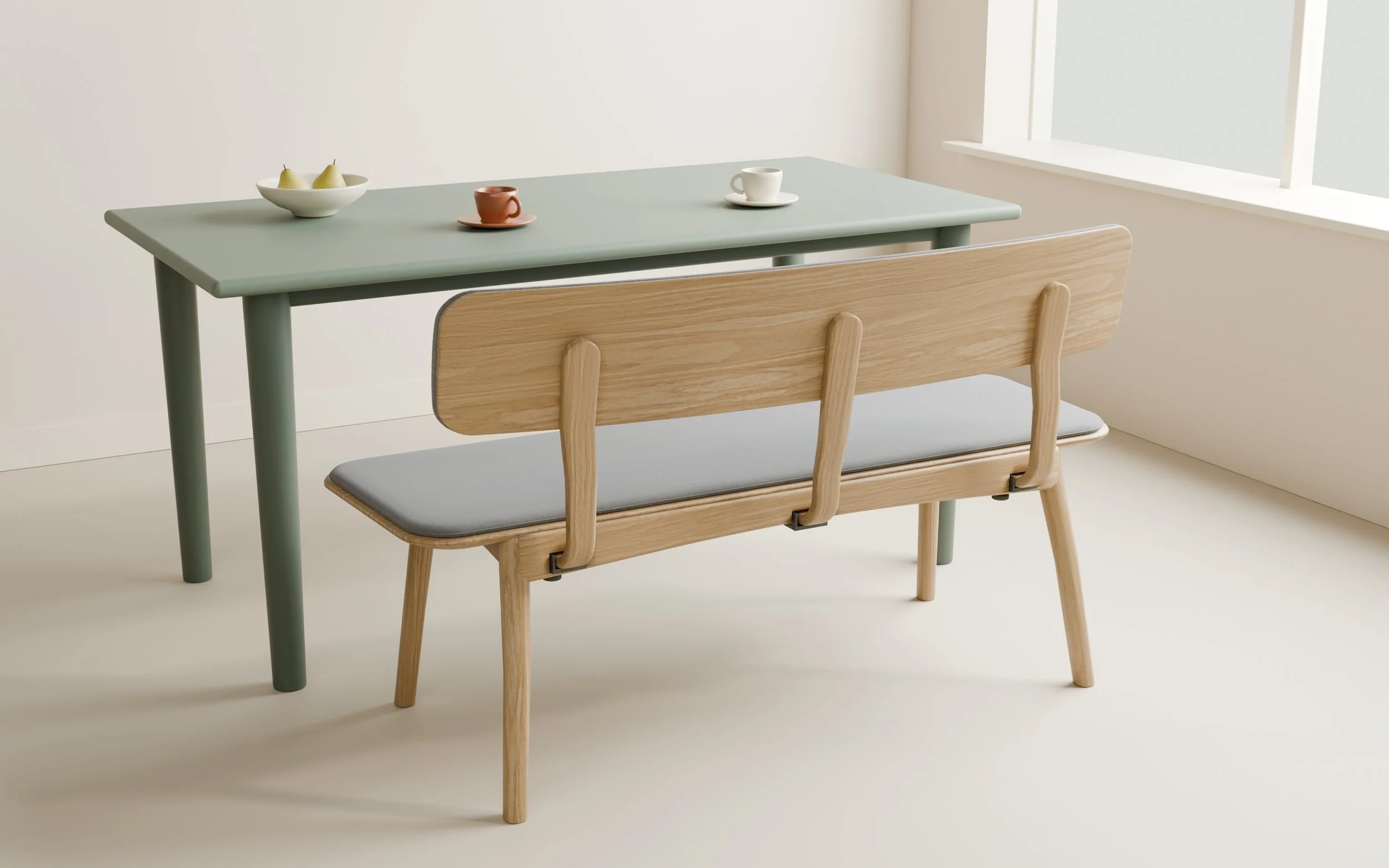
One back for two seats
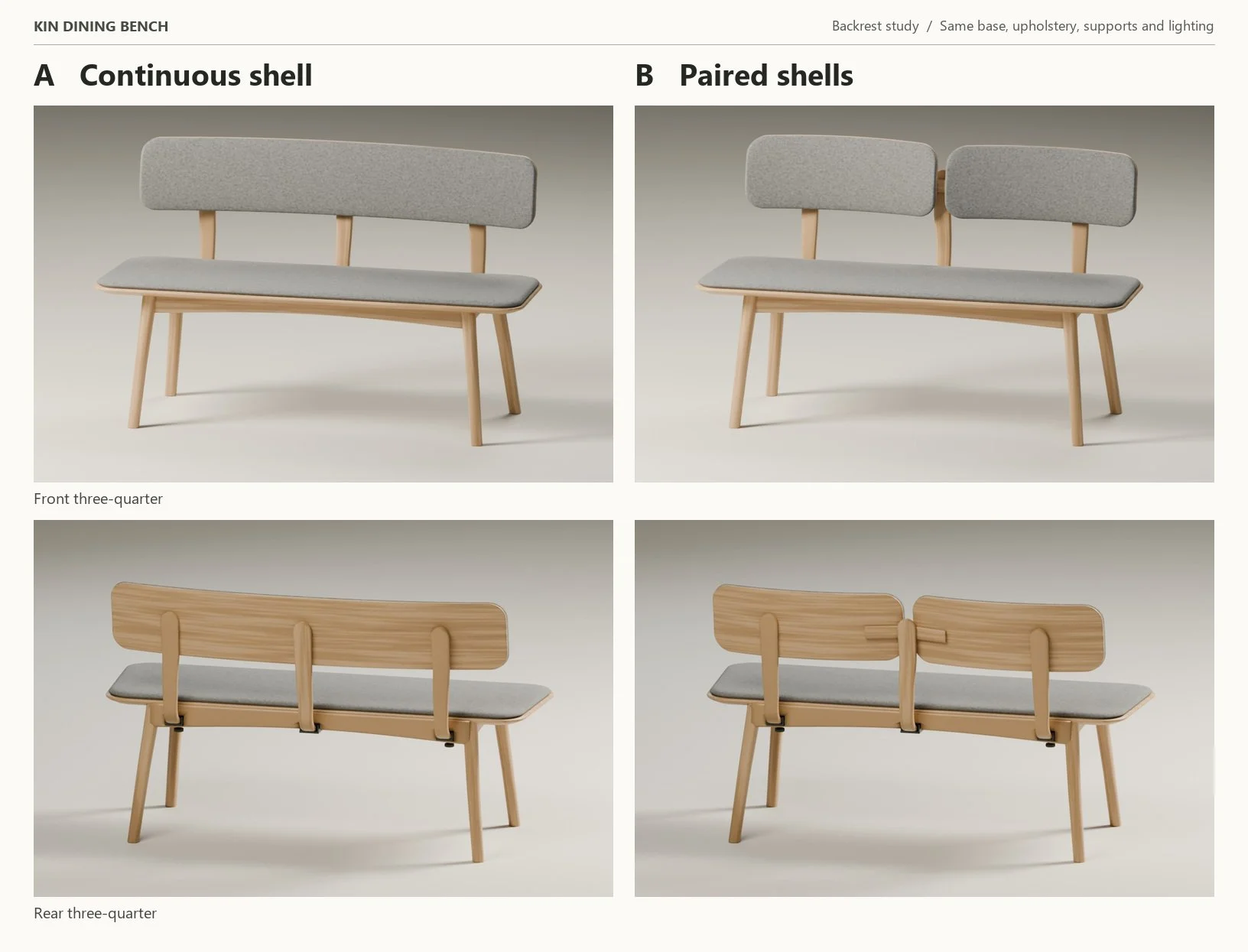
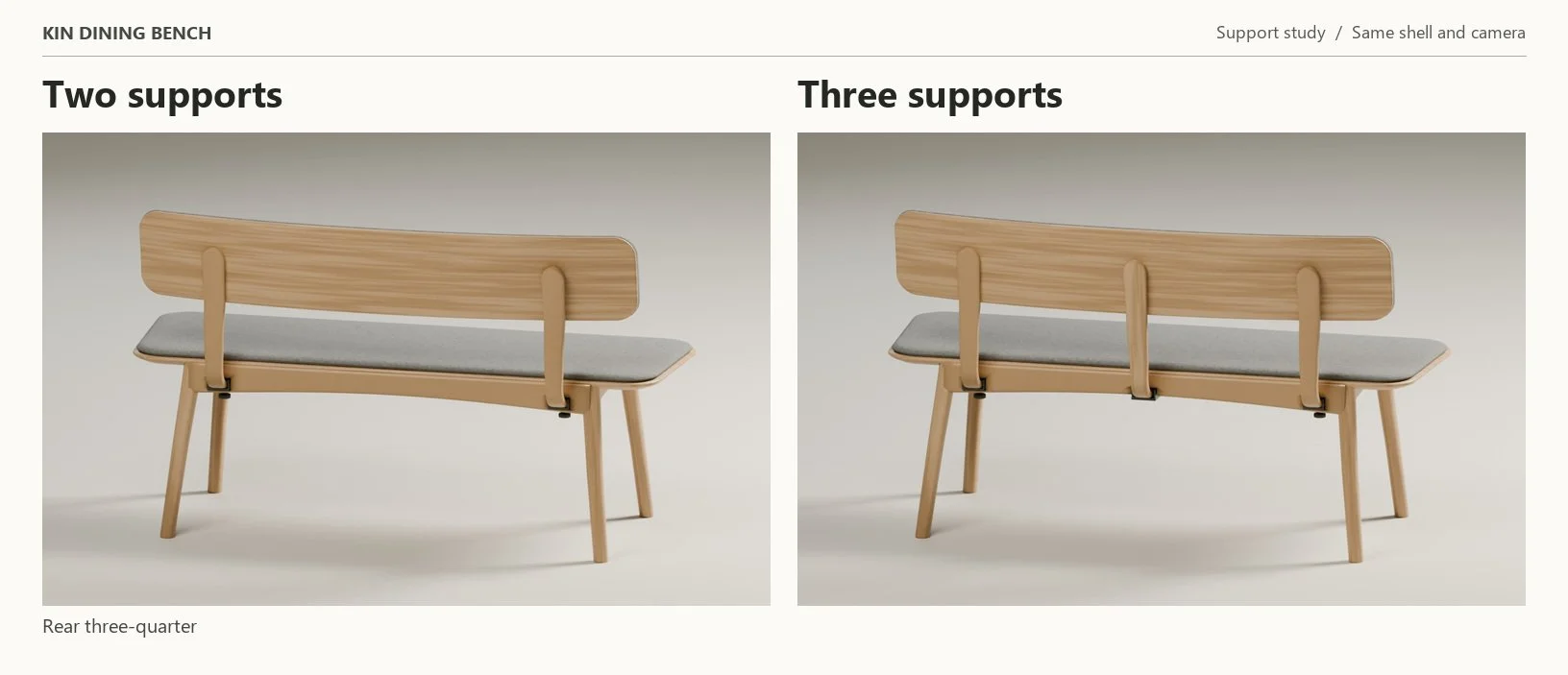
I compared two separate backrests with a single shell on the same base. The single shell carries the sweep of the Kin chair all the way across the bench. A third timber arm supports it midway between the outer two.
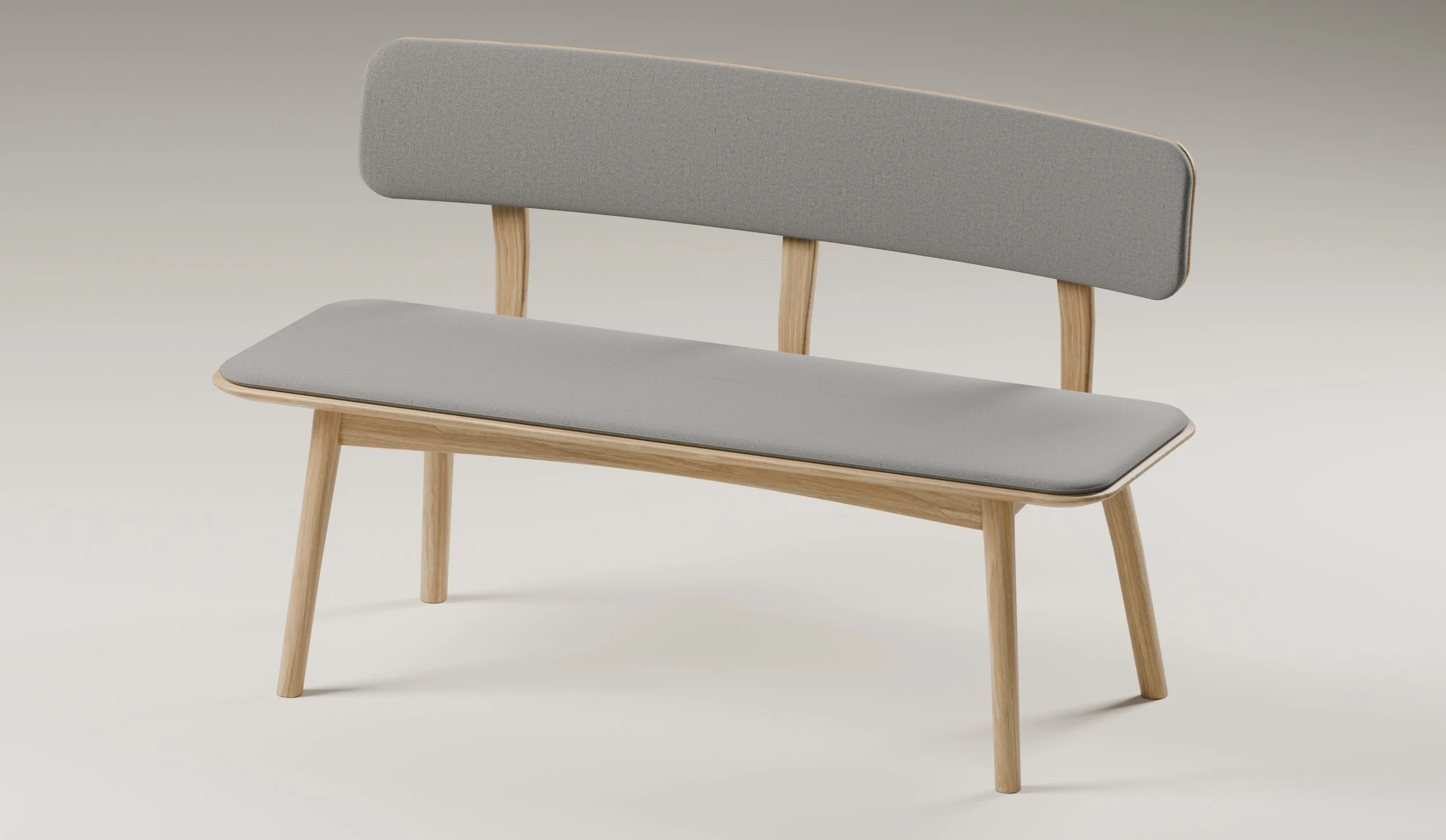
Two parts, no tools
The backrest and its three curved arms come as one piece. The seat, legs and four captive screws make up the base.
Slide the back in
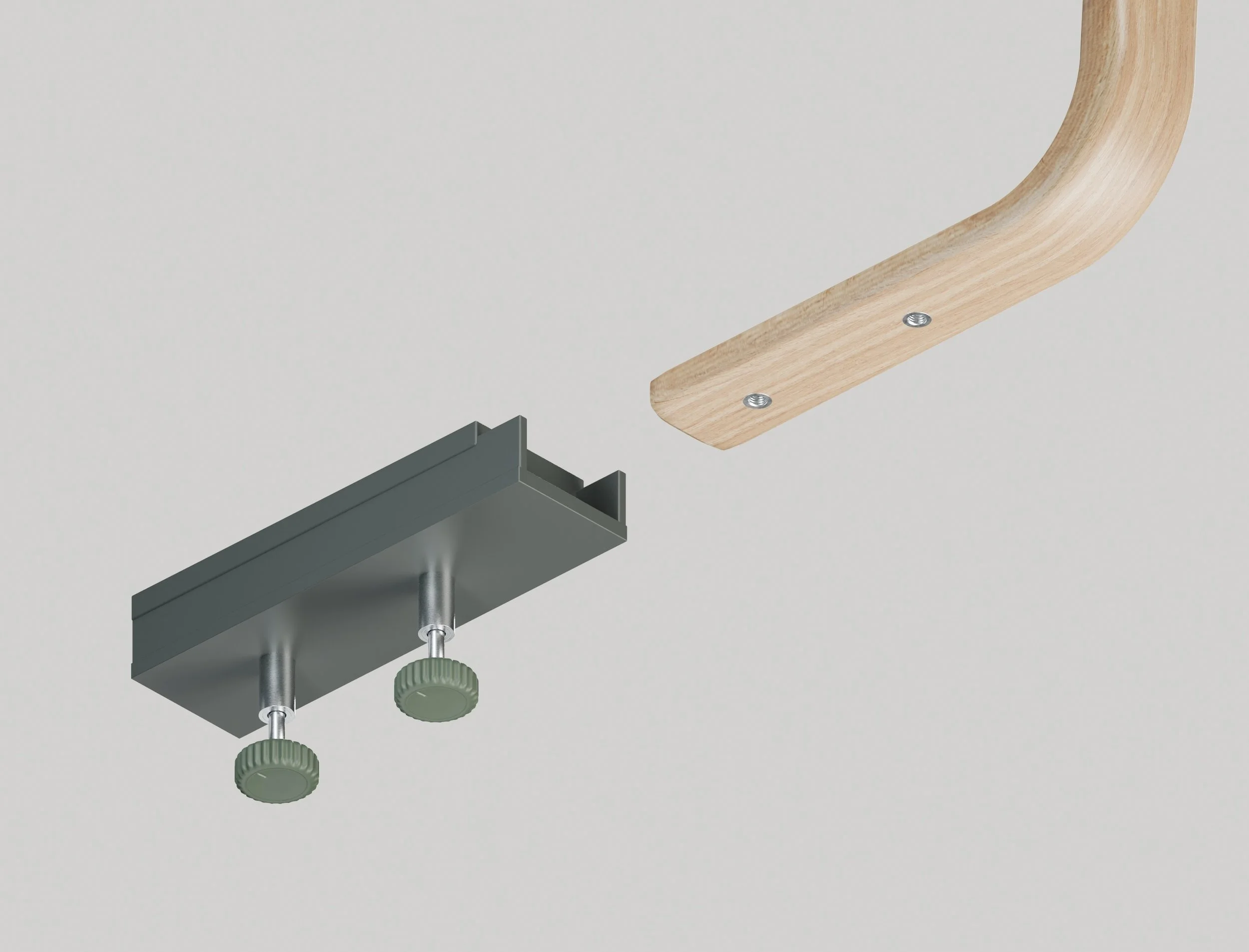
Stand the base upright and loosen all four screws. Line up the two outer arms with the slots at the rear. Slide the back forwards until it stops. The shorter centre arm enters its guide last.
Tighten by hand
Reach under the seat and start both screws on each outer arm. Tighten all four evenly by hand. The centre arm stays in its guide.
Exploded and assembled views
Inside the joint
Steel inserts travel with the two outer arms. The olive thumbwheels turn into them from below, and a collar keeps each screw captive when loosened. The deeper screw sits about 130 mm in from the rear edge.
Where the oak meets the cloth
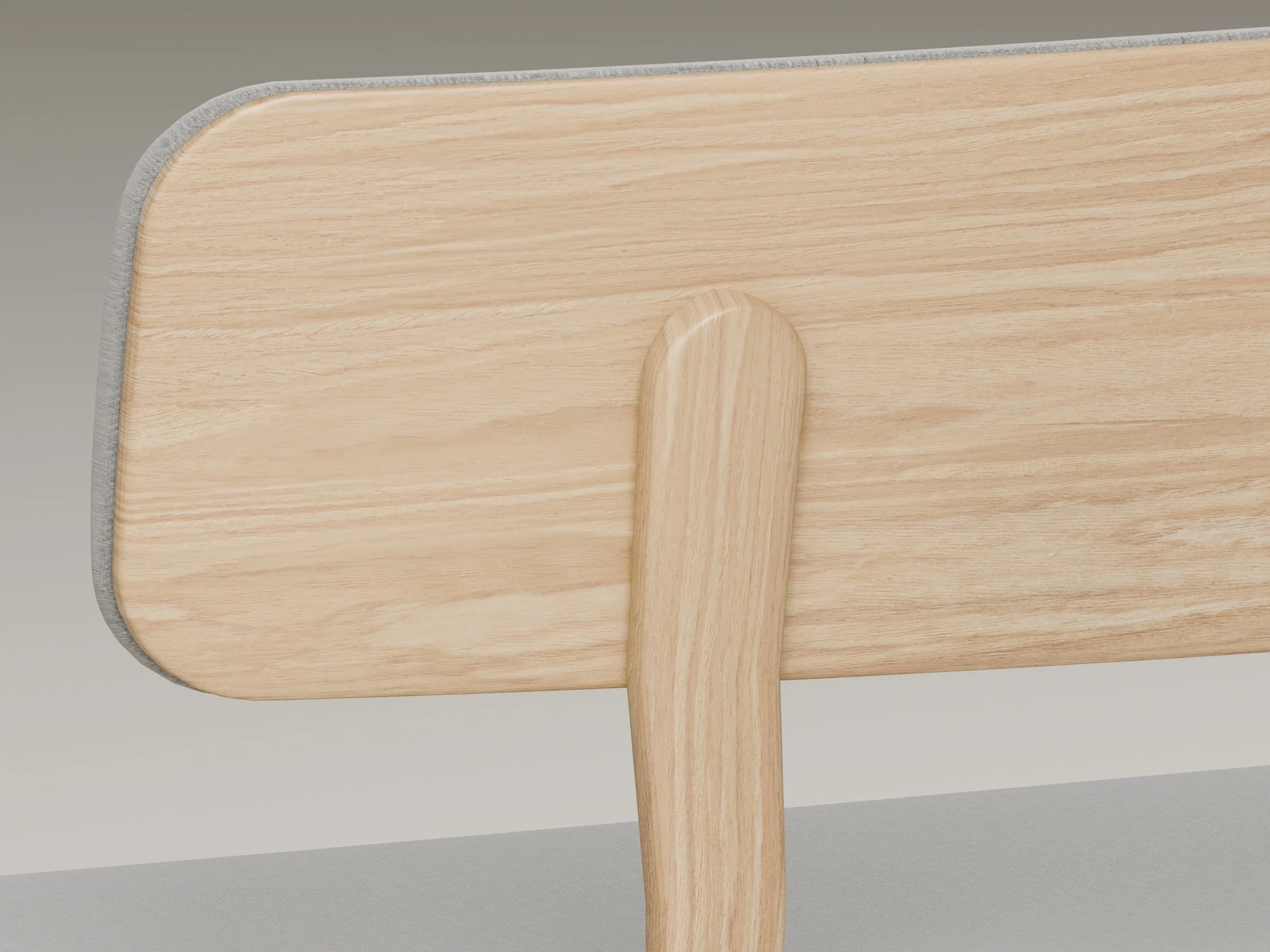
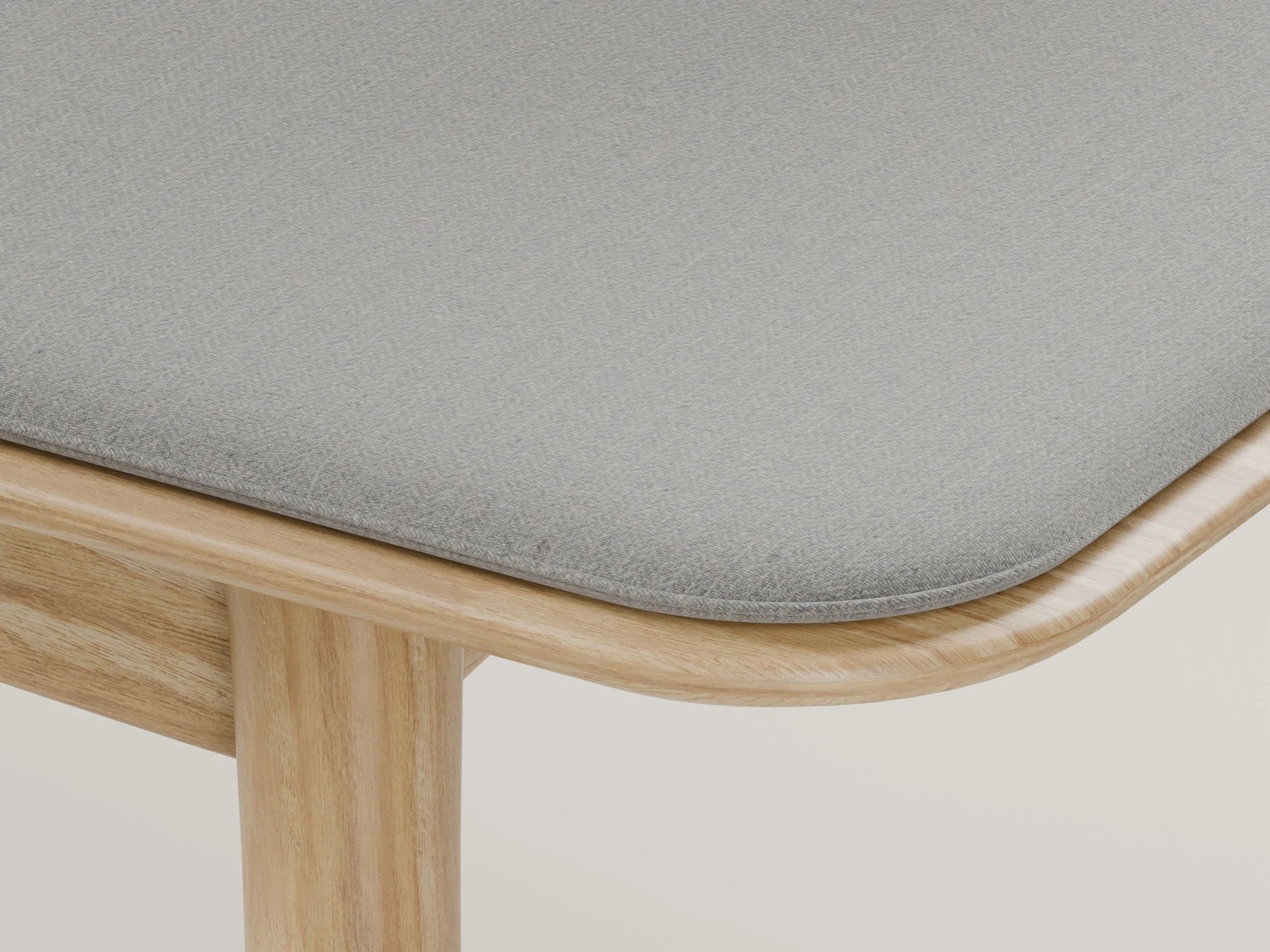
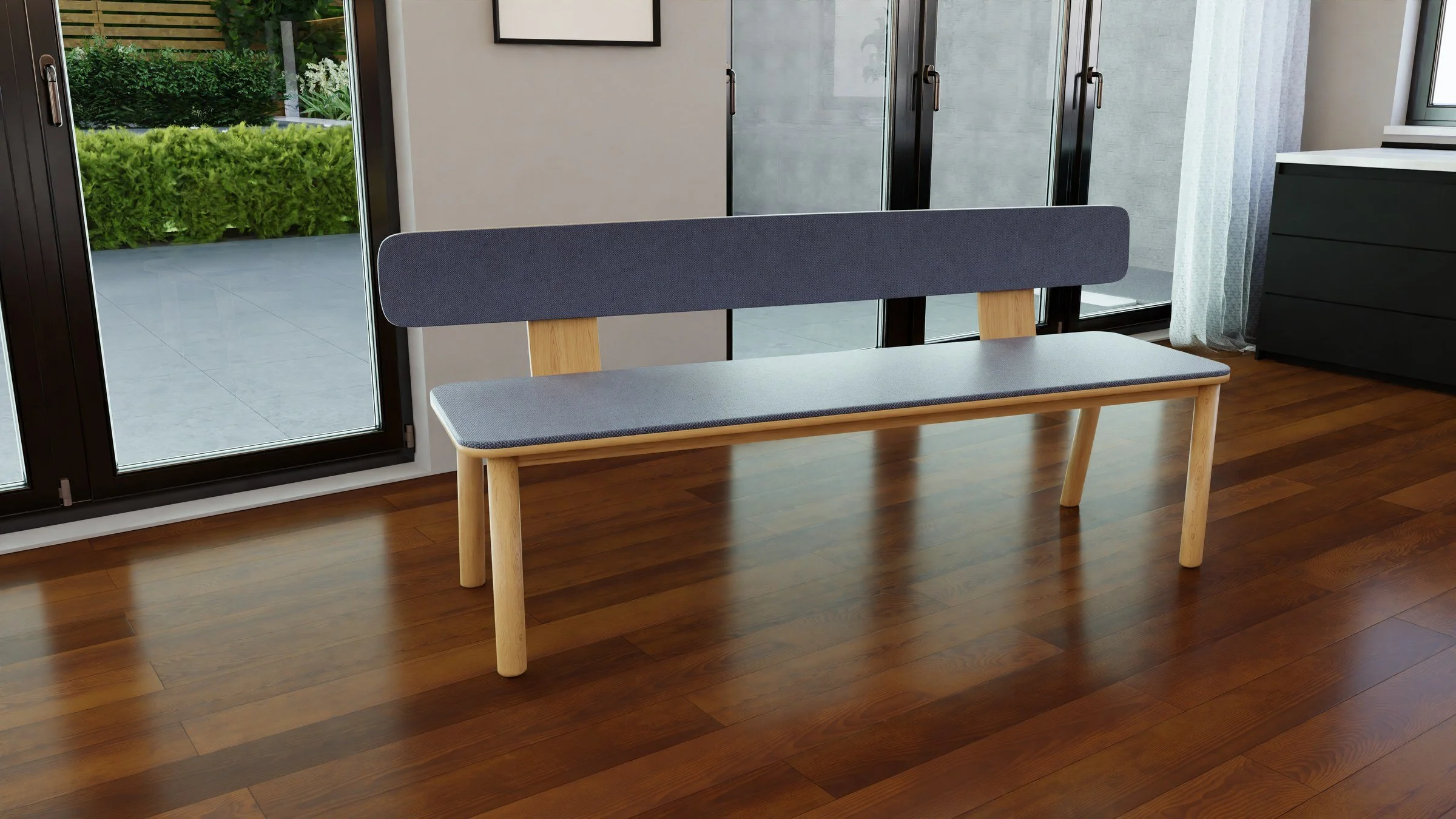
The grain runs lengthways across the backrest and follows each support around the bend under the seat. A narrow line of heather-grey piping finishes the cushion in the same cloth.
Bench dimensions
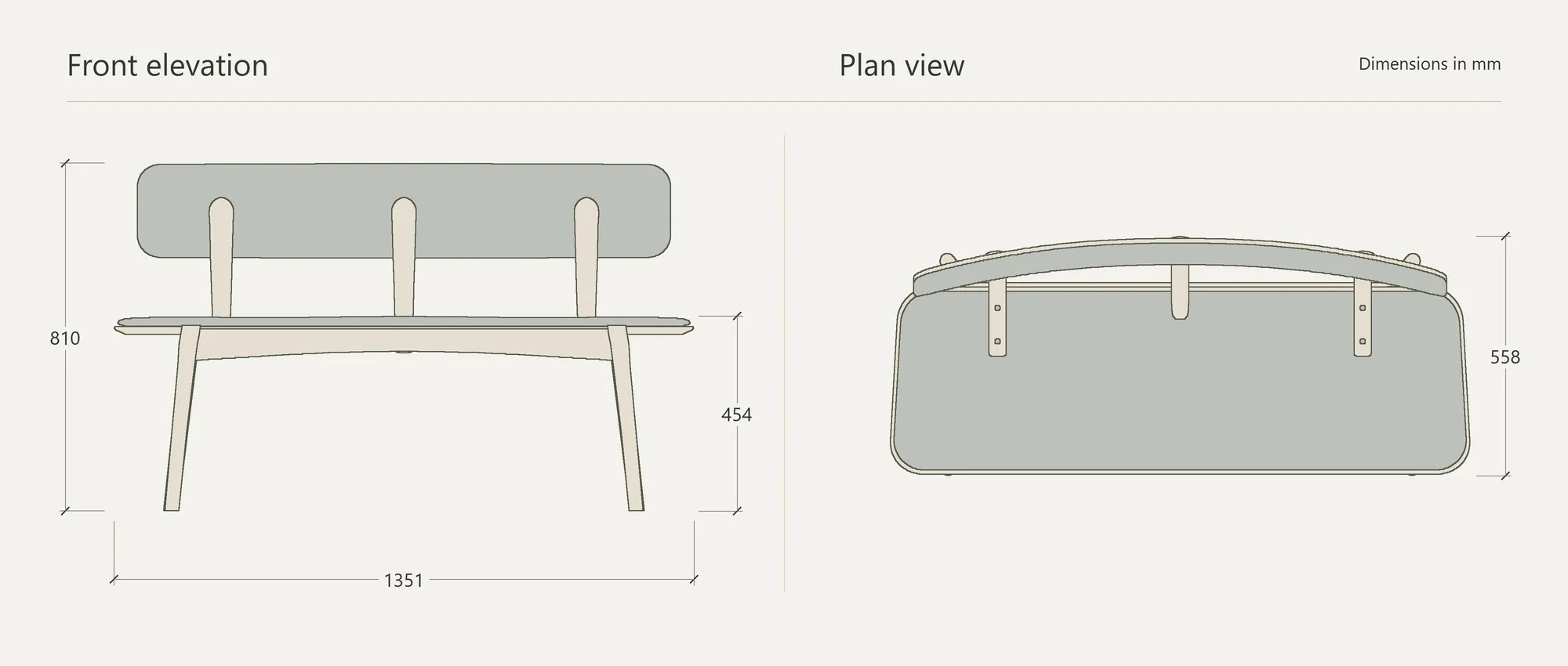
The top of the backrest sits 810 mm above the floor, level with the back of the Kin chair. Both ends of the shell curve towards the table.
- Width
- 1,351 mm
- Depth
- 558 mm
- Height
- 810 mm
- Seat height
- 454 mm
Revisiting the 2023 design
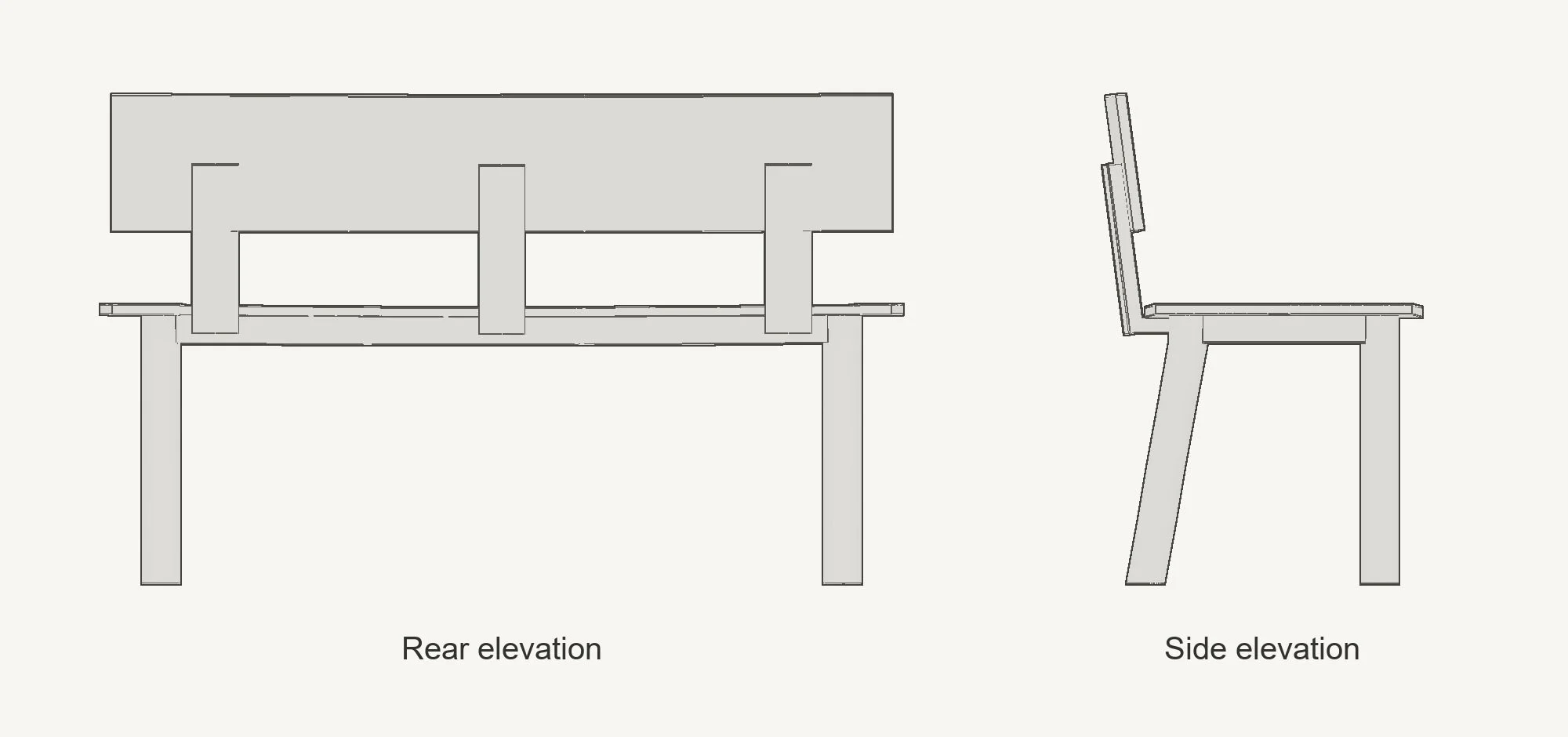
For my 2023 job application to Eva, I modelled the original bench in SolidWorks and built its room scenes in Blender. Three straight posts held up a broad back. In 2026 I slimmed the seat, rounded the shell and bent the arms under the base to make the slide-in joint possible.
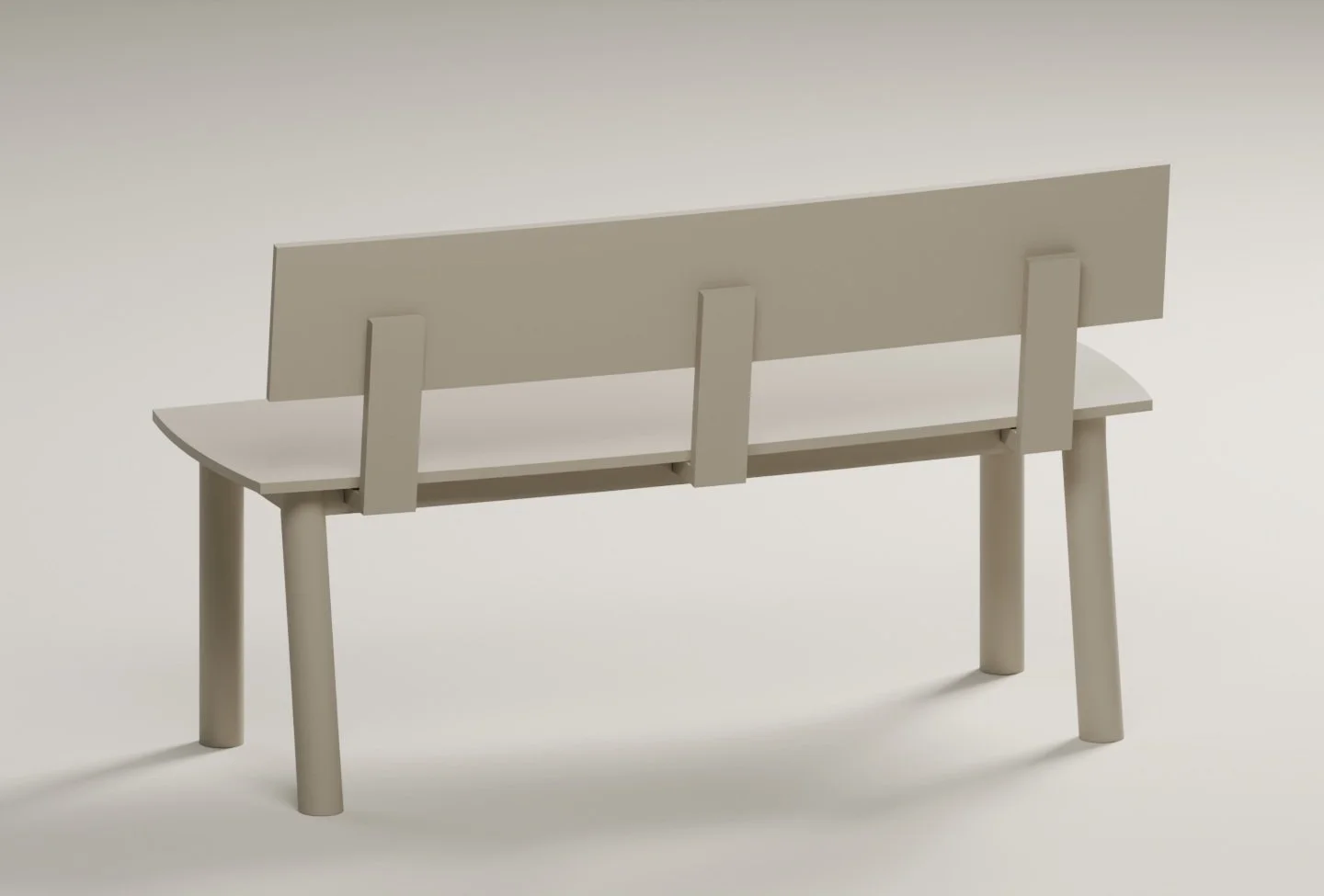
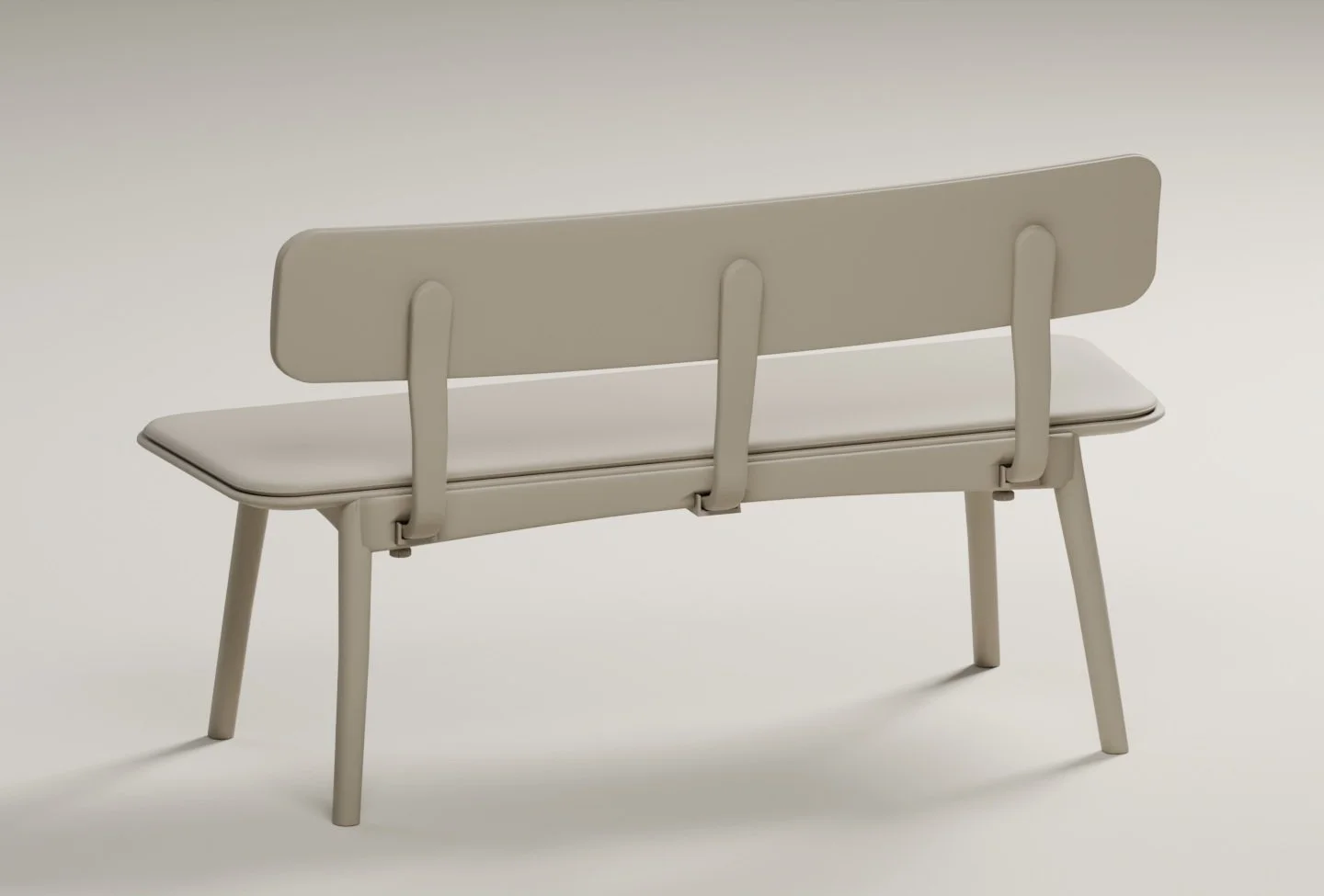
Original room render and CAD elevations
Project credits
- Original, 2023
- Nile Watson · Independent job application concept for Eva. Modelled in SolidWorks and rendered in Blender.
- Design study, 2026
- Nile Watson · Bench and assembly development, with AI-assisted 3D modelling and visualisation in Blender.